

 Membergate

What Can Be Done When Pets Do Bad Things To Good Cushions?
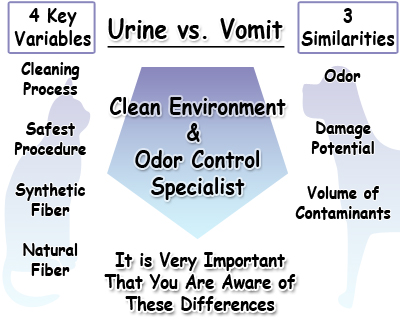
Pets, who are now beloved and treasured family members, will at times become sick and may urinate or vomit on furniture. When this happens, the nature of the problem and solution is similar, but not identical, to what you must do with urine contamination. It is very important that you be aware of these differences.
First, The Similarities:
1. Odor:
Odors from body discharges are unpleasant, and the owner of the furniture will want rid of the odor as quickly as possible. Treating the odor successfully the first time will be vitally important to your customer. (Price will be secondary!)
2. Potentially Damaging Contents:
Vomit contains different chemistry than does urine, but both can cause permanent color damage to fine fabrics made from natural fibers.
3. Volume of Material:
Fluid discharges from pets (and humans!) may have enough volume to rapidly penetrate into cushion foam and other absorbent materials beneath the fabric.
In the case of a high volume discharge of body fluids that saturates the cushion foam, it could require cushion foam replacement. This is the easiest way to solve that part of the problem, and likelihood of success is the best.
Next, The Variables:
However, that leaves the dilemma of how to treat the saturated upholstery fabric which has absorbed quantities of the discharges without causing fabric damage.
Remember these key points if you are put into this position:
#1 – The safest way to proceed is to put the fabric back onto the new cushions before you treat and clean them. There is some risk of contaminating the new cushion foam, but not as much as the risk of shrinkage if the fabric is removed and treated separately.
#2 - In the case of synthetic fiber fabrics, saturate them with an enzyme deodorant, keep them damp for 30-60 minutes, then clean, extract, and dry them.
#3 - In the case of natural fiber fabrics, the chance of shrinkage, browning, texture distortion or bleeding is very high when you apply the needed amount of stain and odor treatment.
#4 - Remember that vomit often permanently stains natural fiber fabrics, as well as some synthetics, such as nylon. The acids and proteins in the stomach, as well as the pigment in bile, are notoriously hard to remove from synthetics, yet alone natural fiber fabrics. We are more aware of how urine stains fabric, "but vomit may indeed be worse"!
#5 - Your cleaning process should be as follows:
(a.) Clean the cushions first. An alkaline pre-spray would be best to neutralize the acid present in vomit, so in the case of natural fiber fabrics, be sure to include risks of browning and fading in your pre-qualifications.
(b.) Next, treat the fabric with an enzyme deodorant, and allow 30-60 minutes of dwell time for maximum enzyme activity to occur.
(c.) After the odor is gone, you can address any remaining stains or browning accordingly
The treatment of furniture fabrics exposed to bodily discharges is time consuming, and very risky based on the "chemistry" of the discharge, and the volume of cleaning and deodorization solutions you'll need to use to treat the fabric. Make sure your customer assumes these risks, not you.
Coming Soon . . .
******************************
Jim Pemberton's
Fabric Pro Upholstery Specialist Workshop
"Specialist" Course With Extensive "Hands On" Training
Class size is very limited for personal attention purposes, so register today.
August 14 - 15, 2026
Attleboro, MA
New Class Coming to Florida later this year!
How Can You Benefit From This?
Click here for complete class details
******************************
Click Here to Register for a class
Next Available Date?
Click Here for The Learning Center Calendar


