

 Membergate

Testing +Identifying Spots/Stains + Understanding Cleaning Chemistry = Cleaning Success!
Once you've cleaned a fabric to the best of your ability, remaining spots or stains can be very frustrating. At times they don't show up until the surface soil is removed, and at other times, that spot/those spots might be the only reason you were called upon to clean the piece.
Here is an example of just that, and how a cleaner having an understanding of everything involved in the process solved what would otherwise have been a frustrating problem.
A cleaner texted this picture to me.
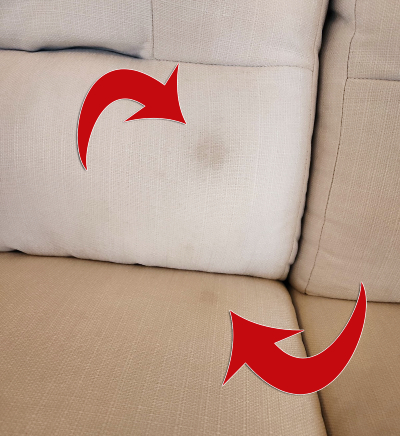
In it you'll see that a few faint spots are visible, which remained after he cleaned the piece a few times. When he asked me how he might get it out, I asked the following questions:
- Question: What is the fiber content?
Answer: Synthetic. This cleaner pretests everything he cleans, which makes the rest of this process MUCH easier! - Question: What do you think created these marks?
Answer: Salad dressing. This meant that the oily material in the salad dressing was attracted to the oil loving synthetic fiber content of the fabric. - Question: What did you use to try to clean it?
Answer: An upholstery preconditioner. The product he chose was nearly neutral, and safe for most any upholstery fabric, whether made from synthetic fibers, natural fibers, or blends.
The cleaner had wondered if a solvent based spotter might be effective. Solvent based spotters can be effective on oily residues, but they also can create challenges due to the potential of damaging adhesives that stabilize the fabric, rings, or even color loss on some fabrics.
What I suggested: Use Gumolene Plus, a mildly alkaline detergent/solvent blend that breaks down oils, but due to the water based detergent that it contains does not create potential negative effects on fabric.
Here is the result:
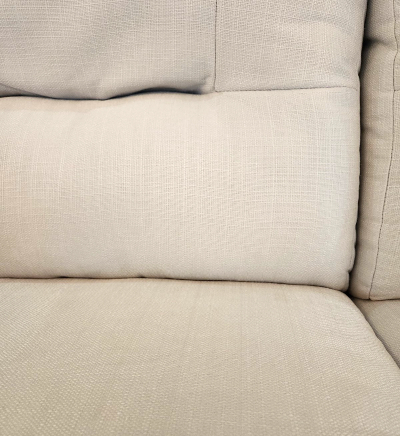
The spots came out completely!
Conclusion:
The cleaner did everything right to start with: He understood the fabric to be cleaned based on his own testing. He also questioned his customer and identified the source of the spots. Finally, he used a product designed for upholstery fabrics. The only thing he needed to do to get the best possible result is to take the next step by going to a stronger, but still safe, product to create an end result pleasing to the customer.
Important Note: Had this cleaner not known what type of fiber was in the fabric he was cleaning, nor what the type of spot he was dealing with, it is unlikely he would have been successful. More importantly, his next step was not to use something “stronger” that was unsafe, like a carpet cleaning prespray.
As stated from the beginning:
Testing + Spot ID + Understanding Cleaning Chemistry = Cleaning Success.
I've rescheduled by Fabric Pro Hands On Upholstery Cleaning Workshop for March 27th and 28th in Farmington New York. A few spots remain, so sign up today!
Coming Soon . . .
******************************
Jim Pemberton's
Fabric Pro Upholstery Specialist Workshop
"Specialist" Course With Extensive "Hands On" Training
Class size is very limited for personal attention purposes, so register today.
New Date Announced!
March 27 - 28, 2026
How Can You Benefit From This?
Click here for complete class details
******************************
Click Here to Register for a class
Next Available Date?
Click Here for The Learning Center Calendar


