

 Membergate

Six Critical Steps For Successful Odor Treatment on Upholstery
The explosion of pet ownership today is presenting odor problems in upholstery more frequently than ever. Cleaners who receive them may be confident in urine odor removal from carpet and rugs, but less confident in how to proceed when it comes to upholstery.
Always follow these 6 critical steps when you treat urine damage on upholstered furniture, with some very important cautions and limitations that you must always consider as well.
#1 - Inspect:
You should use an ultra violet inspection light to determine the extent of the contamination.
In many cases, the cat has urinated on several sections of the furniture in question, possibly other items of nearby furniture as well as the carpet in the home. If you merely treat the area your customer discovered, there is the strong possibility of remaining odor from untreated areas that will result in a call back.
#2 - Test:
Delicate natural fiber fabrics and blends may bleed, fade, shrink, brown, or water mark if you have to inject and/or heavily spray deodorizing treatments on the furniture. If such fibers are present in the construction, your customer needs to be advised of these risks, and informed that they will be required to assume all liability for further damage in writing.
NOTE: Areas exposed to urine contamination may brown, bleed, or fade because of the chemical contents of the urine, even if the rest of the fabric does not. Your test will be a guideline, but you MUST put in writing that such color damage may occur regardless of your test results. You must get written authorization!
#3 - Treat:
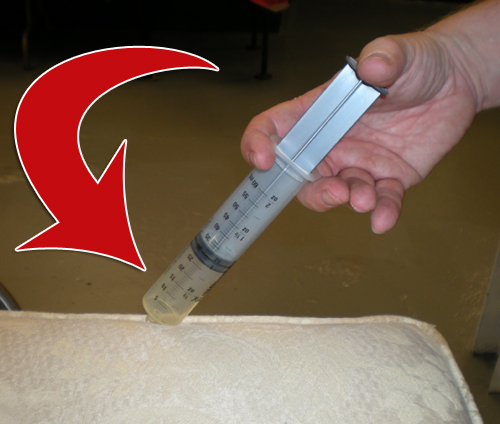
Start by injecting an appropriate deodorizer for urine odor into the area where the urine was deposited. Inject along a seam or under a button to avoid a noticeable hole where your needle has penetrated. This process too may cause color bleeding, bleed through from materials concealed beneath the fabric, and cause water marks as well. Note this too on your work order or inspection sheet.
#4- Apply deodorant to the entire piece of furniture.
TIP: [If your deodorizing product is compatible with your preconditioning agent, simply add it to your prespray.]
#5 - Extract:
Clean the fabric to remove loosened urine contaminants and other soils. Use an acidic rinse agent.
#6 - Re-apply deodorizer:
Use a deodorizer that does not leave a strong fragrance or an sticky residue that could attract soil.
As long as your deodorizer reaches the contamination, and as long as you also clean and treat other urine damaged areas, you should expect to reduce the urine odor below anyone's ability to readily recognize it, if not completely eliminate it.
*****************************
Coming Soon . . .
******************************
Jim Pemberton's
Fabric Pro Upholstery Specialist Workshop
"Specialist" Course With Extensive "Hands On" Training
Class size is very limited for personal attention purposes, so register today.
Please Join Us Here - July 18 - 19, 2025 in Rochester, NY
How Can You Benefit From This?
Click here for complete class details
******************************
Click Here to Register for a class
Next Available Date?
Click Here for The Learning Center Calendar


