

 Membergate

When Restoring Water and Smoke Damaged Fabrics:
These 3 Steps You Must Not Skip!
INSPECT
ACT FAST
UNDERSTAND THE DIFFERENCE!
Whether you are a fine fabric cleaning specialist being called upon to clean fire or water damaged upholstery, or are a disaster restoration company that offers content as well as structural restoration, you will find high value fabrics that need to be restored to "pre-loss" condition.
Always Remember These Three Things Before You Touch Fabrics That Have Been Subjected To Water Or Smoke:
#1. Inspect:
Its important to know what damage has been caused by the disaster, versus what was pre-existing soils, spots, and stains. Ultimately, you will usually be expected to remove both, but remember that your primary responsibility is to restore the fabric to "pre-fire" or "pre-flood" condition. In most cases, pre-existing hair oil, food spills, and overall soiling are removed by the same products and processes that remove smoke film.
However, in the case of delicate fabrics, such pre-existing conditions might not be removed during restoration processing. How far you will be expected to go in exceeding your "pre-loss" responsibilities is something that should be explained clearly to the insurance representative.
#2. Act Fast:
Damage from both smoke and water only gets worse with time.
Here are just two of many examples:
. . . (a) smoke residue on "stable" fabrics:
Allowing smoke residues, which are acidic in nature and contain staining materials that can discolor fabric, to remain on fabric for a long period of time usually will guarantee that restoration will NOT be possible. Proper removal of soot and smoke residues with the appropriate tools and procedures as soon as possible can often allow for total restoration of fabrics that otherwise would have permanent stains.
. . . (b) smoke residue on "unstable" or fine fabrics:
If valuable fine fabric contents cannot be rapidly cleaned, permanent staining from soot and smoke residues can potentially be prevented by blowing off oily soot with air or lambs wool dusters, vacuuming, and when possible, lightly wiping down the fabric with dry cleaning solvent or a mild neutral detergent solution.
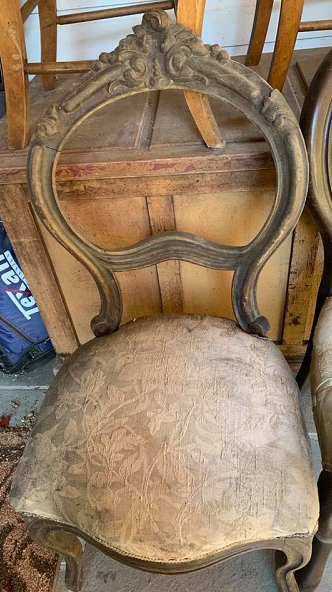
"The oily soot residues on these fine fabrics must be removed with lambs wool dusters or compressed air before vacuuming or the application of any cleaning product"
The preceding basic, "precleaning" technique has the best potential for preventing staining and make subsequent more thorough cleaning faster and more successful.
. . . .Water: on "unstable" or fine fabrics:
Fabrics that are allowed to remain wet for extended periods of time will often bleed, brown, shrink, water stain, or even experience mold damage.
These Steps Will Limit Such Damage Until Final Cleaning Can Be Completed:
. . . (a) Extraction of excess moisture
. . . (b) Apply distilled water to the entire piece or cushion to prevent water marks.
CAUTION: Do not just treat the wet and surrounding areas alone!.
. . . (c) Dry rapidly, and evenly.
Rapid drying of one area of a saturated fabric while the other remains wet can contribute to water marks. Be sure to rotate cushions and the body of the furniture so that even drying occurs.
#3. Understand the Differences:
Most Fine Fabric Specialists understand normal soiling, such as body oil, food and drink spills, animal damage, etc. As outlined in the previous article, smoke, soot, and water create different cleaning challenges that rarely respond to standard cleaning techniques and products.
SUMMARY THOUGHTS:
Whether or not you are a restoration company or a fine fabric specialist who wants to offer your services to the restoration businesses in your market place, you should consider the learning of these skills to be an important way to increase your customers retention and loyalty, as well as a strong marketing position to set yourself apart from those who will not take the time and make the investments needed to truly become a Fine Fabric Restoration Specialist.
*************************
If you'd like to know more about cleaning upholstery, and how to “do it right” the first time, every time, join me at our next Fabric Pro Class.
Want more details about the class? CLICK HERE
Jim Pemberton presents:
'Fabric Pro Upholstery Specialist' workshops
Next Available Date?
Click Here For Pembertons Learning Center Calendar:
*****************************
Coming Soon . . .
******************************
Jim Pemberton's
Fabric Pro Upholstery Specialist Workshop
"Specialist" Course With Extensive "Hands On" Training
Class size is very limited for personal attention purposes, so register today.
Please Join Us Here - Feb 21 - 22, 2025 in Asheboro, NC
How Can You Benefit From This?
Click here for complete class details
******************************
Click Here to Register for a class
Next Available Date?
Click Here for The Learning Center Calendar


