

 Membergate

Mis-identification of Upholstery Fabrics Causing Damage Claims!
WARNING! The Fabric You Are About to Clean Might NOT be Microfiber!
Microfiber fabrics are very popular today, and with that popularity, too many cleaners have become blinded to the fact that there are other textured fabrics in their customers' homes that are not nearly so durable, or fool proof to clean!
Microfiber fabrics are, for the most part, durable and can be cleaned with alkaline upholstery cleaning products, heat, and agitation. In fact, without these aggressive techniques and more powerful agents, you might not get good results.
However, too many cleaning technicians are becoming lulled into apathy, and think that anything resembling a microfiber can be cleaned in the same way . . . with disastrous results!
Here is a picture of a fabric that was not properly groomed because it was thought to be microfiber:
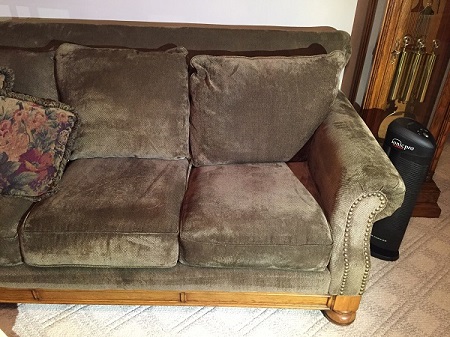
Experienced cleaners may laugh and say: "This is obviously a velvet fabric!" But don't feel so sure that even a caring and responsible technician would know this. Velvet is not nearly as popular or commonly seen as it was several years ago.
While some velvet's are made from 100% synthetic fibers, and perhaps be somewhat easy to clean with minimal texture problems, many are made from natural fibers, or blends of natural and synthetic fibers. Velvet made of these fiber types may be challenging to clean, and the texture difficult to impossible to restore!
The fabric in this picture is a blend of natural and synthetic fibers. Natural fiber velvet is easily distorted by use, as well as by cleaning, and requires careful cleaning to prevent further distortion, as well as time consuming grooming afterward to restore the appearance.
Even more importantly, the customer must be told that no texture restoration process will bring the appearance back to a like new condition. Once a fabric is made to look worse by improper cleaning and a lack of grooming, the customer will often look for perfection before they will accept the results.
Because of the weakness of rayon fiber fabrics, that perfection will NEVER be attainable.
How can this problem be prevented?
#1. Test, Inspect, and Qualify:
A simple burn test will reveal the presence of natural fibers. Inspection will show pre-existing damage. Once you establish these conditions, you MUST warn your customer that the fabric will NOT look like new when you're done.
#2. Clean Carefully:
Use detergents safe for natural fiber fabrics for preconditioning, and rinse thoroughly to leave the fibers soft and easy to groom.
#3. Groom:
Use grooming brushes, and if necessary, a fabric softening treatment, to restore the nap to as close to the original appearance of the fabric as possible.
SPECIAL NOTE:
Textured fabrics, whether velvet, chenille, or even microfiber are purchased because your customer likes the look and feel of these fabrics. You will have happier customers, more referrals, and less potential claims and complaints if you learn to understand what type of fabric and fiber you are cleaning, explain to your customer what condition the fabric will be in when you're complete, and then deliver the best possible job when you're done.
Coming Soon . . .
******************************
Jim Pemberton's
Fabric Pro Upholstery Specialist Workshop
"Specialist" Course With Extensive "Hands On" Training
Class size is very limited for personal attention purposes, so register today.
Please Join Us Here - January 9 - 10, 2026 in Farmingdale, NY
How Can You Benefit From This?
Click here for complete class details
******************************
Click Here to Register for a class
Next Available Date?
Click Here for The Learning Center Calendar


