

 Membergate

What’s Worse Than Pure Linen Fabric?
Answer: Linen blended with a synthetic fiber! There is a popular trend to create fabrics that are 90-95% polyester and 5-10% linen. You might think that the more durable, easy to clean fiber in this blend could dictate your cleaning method.
You would be wrong!
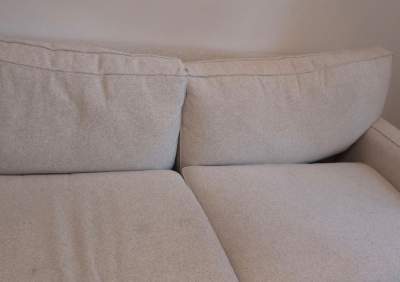
- Synthetics (including polyester) Attract Oil and Repel Water. That's ok on pure synthetic fibers; you can use alkaline prespray agents with solvent boosters to break down oily residues and plenty of hot water to separate the suspended soils and rinse them away.
- But When Natural Fibers are ALSO Present, It Gets WORSE: Why? When synthetics are blended with natural fibers, the water resistant synthetic fibers shed the cleaning solutions you would first choose to clean synthetic fibers and allow them to “run off” into the absorbent, moisture and pH sensitive linen fractions of the material.
- Then What? When the fabric dries, lignin in the linen fibers wicks to the surface and turns the fabric brown!
- But Then It Gets Even WORSE! Linen doesn't respond well to the reducers and oxidizers typically used to remove browning, and even the small percentage of browning from the linen becomes a very difficult task!
How To Stay Out Of Trouble with Polyester-Linen Blends
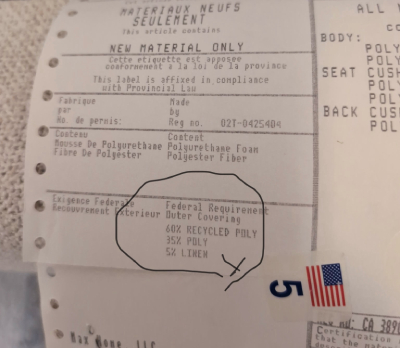
- Test! Your burn test will still detect the small amount of natural fiber blended with polyester. When you crush the (mostly) hard ash, a small amount will crumble and that's your key. In some rare cases, the fabric has an “outer fabric label”, as you can see in this picture:
- Clean To The Problem Fiber: Despite the fact that this fabric might be over 90% synthetic and easy to clean, your cleaning procedure and products must be those safe for linen and other delicate, natural cellulose fibers.
- VLM is Your Friend: When it doubt, using a Very Low Moisture cleaning system with minimal moisture and a neutral to mildly acid pH will keep you out of trouble on these fabrics.
- Clean it Before The Fabric Becomes Too Soiled: If, when visiting a customer to clean carpet, floors, or area rugs, tell them that such fabrics should be cleaned when the overall appearance is just slightly dull. If you can clean it then, you won't need to use techniques that might cause browning.
The Bottom Line:
Polyester-Linen blends have been being sold into your market place for the past 10 years. These high risk fabrics are now well into the cleaning cycle, and you must be prepared to clean them to your customers' satisfaction, while keeping yourself out of trouble.
Coming Soon . . .
******************************
Jim Pemberton's
Fabric Pro Upholstery Specialist Workshop
"Specialist" Course With Extensive "Hands On" Training
Class size is very limited for personal attention purposes, so register today.
April 23 - 24, 2027
Chicago, IL
How Can You Benefit From This?
Click here for complete class details
******************************
Click Here to Register for a class
Next Available Date?
Click Here for The Learning Center Calendar


