

 Membergate

Four Challenges Created by Spills with Red Dyes on Fine Fabrics
Children (and more than a few adults) enjoy soft drinks that contain red dyes. However, such products really should be kept away from all carpet and upholstery fabrics!
While that sounds good, the lifestyle of today's consumer is such that these types of restrictions don't usually occur in the real world. And, while red dyes are most commonly seen in soft drinks, they may also be present in liquid medicine, pie filling, gelatin, and cake icing, to name just a few.
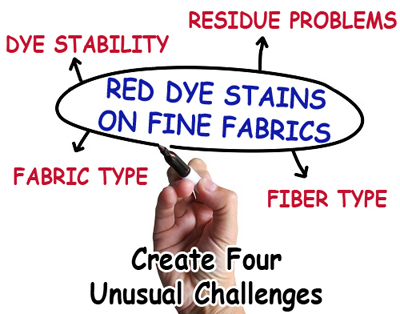
Spills that contain red dye create four unique challenges that might easily be overlooked.
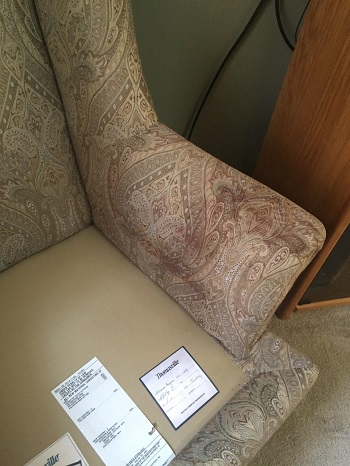
#1 - Fiber Type:
In most cases, the red dyes present in these spills easily stain nylon and wool. Cellulose fibers, such as cotton, linen, and rayon are not as easily stained by red dyes, though their absorbent nature will still make the removal process more challenging. Polyester and olefin fiber fabrics will release red dyes relatively easily.
#2 - Dye Stability:
Red dye removal products themselves may cause color loss on fabrics that are otherwise colorfast. Be VERY cautious when you are asked to remove dye stains from fabrics with dark colors, especially when they are made of natural fibers.
#3 - Fabric Type:
Soft textures, such as chenille or velvet, are very difficult to treat for any spots without causing texture damage!
Caution: Most dye removal processes require repeated applications and perhaps heat. Repeated attempts to remove spots in one given area almost always create permanent texture distortion.
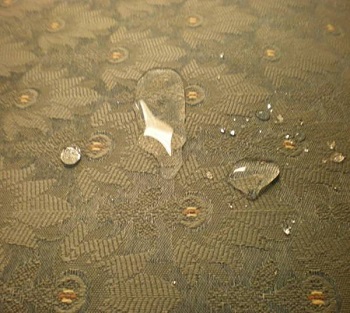
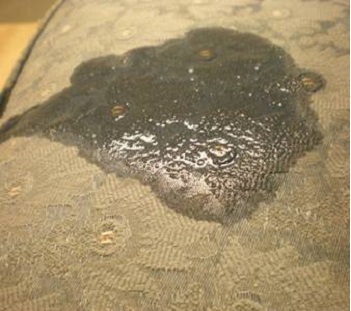
#4 - Residue Problems: Few cleaners think beyond the importance of removing the visible stain. However, as a fine fabric specialist, you must think of all of the potential consequences of everything that you do. Most red dye removal products used in our industry contain surfactants that are very difficult to remove from upholstery fabrics. If you treat a red stain with such a product, its unlikely that fabric protector will bond effectively afterward. Be careful offering such an add on service for furniture that has to be treated with a red dye removal product.
To keep these issues from becoming a problem for you, follow these steps:
Test, Inspect, Communicate:
Find out all you can about the type of drink that was spilled, and what your customer might have done to attempt to remove it. Your red dye remover may also affect the color of the fabric, and testing may not reveal such damage potential. Also, test to determine the fiber family and inspect to see if the fabric's texture will hold up to your spotting process. Above all, warn your customer of any risks involved before you begin, (verbally and in writing!)
Clean First:
If the fabric is made from polyester or olefin, the red dye stain may likely come out, or at least lighten from cleaning alone. Depending on any efforts your customer might have made to remove the stain, and perhaps the presence of an existing fabric protector, red dye stains may also come out of cellulose fiber fabrics as well.
Treat Remaining Stains with Professional Care:
Red dye removers cannot be used on delicate upholstery fabrics in the same way as they are used on carpet. Apply the product to the stained area after cleaning, and while the fabric is still damp. Allow several minutes of dwell time and look to see if the color is fading. In some cases, the stain will fade over time, then the fabric can be rinsed to remove as much residue of the red dye treatment as possible. A limited amount of steam may be used if needed, but recognize that introducing heat greatly increases the chance of creating damage to existing dyes, as well as a texture distortion.
The most important thing to remember is that you need as much information as possible about the spill, the circumstances of the incident, and what it was spilled on before you can proceed. You also must be sure that your customer is aware of these variables and risks and clearly understands the limitations of what you can do within the parameters outlined here.
**************************************************
Our Fabric Pro Workshop is back with new cleaning procedures and marketing concepts to fit today's changed cleaning marketplace!
Two Day - All New "Fabric Pro Specialist Work Shop" With "Hands On" Training
[Next Available Date and Location? Click Here For The Learning Center Calendar:]
Instructor: Jim Pemberton
Time: 8:00 AM – 5 PM each day
Cost: $975.00 per student
Good for 2 IICRC CEC's
Lunch & Refreshments Included
Click Here to Register For a Class
************************************************


