

 Membergate

Be Wary Of Spot And Stain Removal Issues With Upholstery Fabrics
One of the most common reasons that you'll receive a call for upholstery cleaning services is because of the presence of a spot. The call might come in for “cleaning”, but the reason that the customer called you was because they are upset about an unsightly spot, or spots.
The good news is that many spots release readily from upholstered fabrics!
When spots come out easily on some jobs, but not on others, this can be very frustrating! The reason that this inconsistency exists often relates to what fibers are used to make the fabric.
In most cases, the easiest “rule of thumb” is that synthetic fibers are the most stain resistant, and that natural fibers are the least stain resistant. The reasons we MOSTLY follow this rule are because of the follow general characteristics of each fiber family.
SYNTHETIC FIBERS (Includes acrylic, nylon, olefin, and polyester):
#1. Low Absorbency
Liquid spills simply do not penetrate nearly as deeply into the fiber surface as they do in natural fibers.
#2. Chemical Resistance
Most synthetic fiber fabrics are not easily damaged by aggressive cleaning chemistry and even stubborn stains may be removed from such fibers.
#3. Durability
Most synthetic fiber fabrics are more durable and hold up to blotting, brushing, extraction techniques, and flushing with water based solutions.
NATURAL FIBERS (Includes cotton, linen, silk, wool, plus these regenerated cellulose fibers: rayon, tencel, viscose)
#1. High Absorbency.
Spills may penetrate deeply into natural fibers, and create stains that would only be spots on a synthetic fiber fabric.
#2. Chemical Sensitivity
Natural fiber fabrics are more easily damaged by bleaches and some acids, cellulose based natural fibers may experience browning, and the dyes used in natural fiber fabrics tend to be less stable than those used in synthetics.
#3. Poor Durability
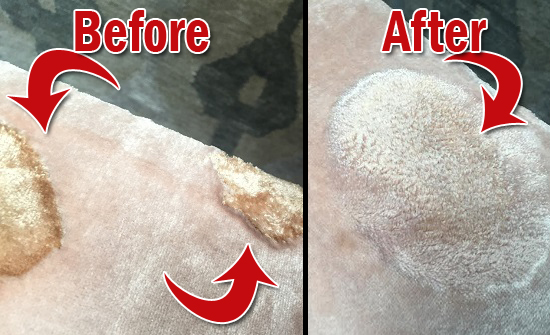
Natural fiber fabrics, especially those made from cellulose (cotton/linen) and regenerated cellulose (rayon/acetate) may be more easily distorted, damaged, or may experience shrinkage when even the simplest spot or stain removal processes are attempted.
EXCEPTIONS:
a). Nylon is susceptible to some dye stains. Soft drinks and medicines that contain artificial red dye may permanently stain nylon fibers, and red dye removal products made for carpet may not be effective or may be unsafe to use on upholstery with nylon fibers.
b). Both nylon and acrylic fibers may have unstable dyes. Neither have much issue with colorfastness with regular cleaning techniques, but stain removal products may bleach these fibers. Some acrylic fibers experience color bleeding or color loss from dry solvents as well.
c). Cotton is somewhat resistant to acid dyes, such as are used in soft drinks and medicine. Light application of a red dye remover without heat will often remove such stains from cotton.
What all of this means is that you must ALWAYS know the fiber family of what you are cleaning. Although it might be helpful to know the specific fiber (as the above exceptions indicate), it is often difficult to make such precise determinations with upholstery fabrics because of blends and backings which can influence or change odors and flame colors when tested!
Because of these uncertainties, any spot that does not come out during routine cleaning should only be treated with a clear pre-understanding with the customer and approval for you to proceed in writing, or via a text or email permission.
Coming Soon . . .
******************************
Jim Pemberton's
Fabric Pro Upholstery Specialist Workshop
"Specialist" Course With Extensive "Hands On" Training
Class size is very limited for personal attention purposes, so register today.
October 9 - 10, 2026
Gainesville, FL
How Can You Benefit From This?
Click here for complete class details
******************************
Click Here to Register for a class
Next Available Date?
Click Here for The Learning Center Calendar


