

 Membergate

Help! I Have a Bloody Mess on My Beautiful Ottoman!
Pet (or human) accidents do not just include urine, feces, and vomit. Accidents can occur where bleeding is involved, and the need for removal of blood contamination will come up from concerned pet owners or caregivers more often than you might imagine.
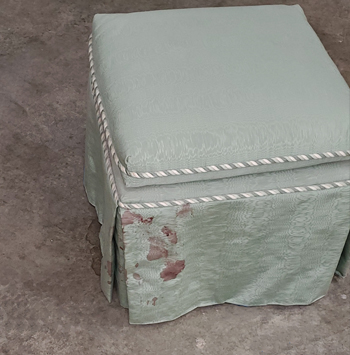
Do not allow yourself or an employee to contact human blood without first completing needed training and all procedures and protections mandated by OSHA
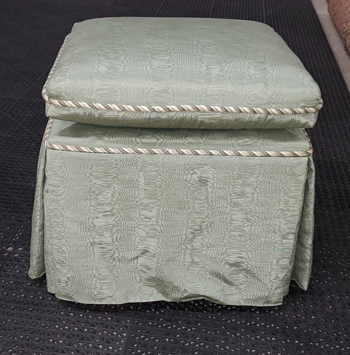
Once you understand the risks involved with exposure to human blood, you can follow these steps to remove blood caused by minor accidents from people or pets.
Inspection and Communication:
Inform your customer of these critical factors with this particular blood removal process:
Factor (1)
The products needed to remove the blood can cause color loss, bleeding, or cellulose browning in natural fiber fabrics. Your customer cannot hold you responsible for these conditions, and they otherwise have the option of discarding the item. Be sure to have a clear agreement in writing, email or text on this issue ahead of time!
Factor (2)
Time needed to perform the work will always exceed the time needed for standard cleaning. The price charged should be significantly higher, as the work may need to be done in plant, and several steps may be needed for complete removal.
Factor (3)
Inspect cushion foam and the body of the fabric to determine of blood has penetrated deeply within the structure of the upholstery. Cushion foam replacement may be needed, and in the case of deep penetration of blood within the body of the item, replacement should be recommended. See ** after article.
Cleaning Steps:
#1. Vacuum:
Remove all dry material first. Scrape and brush away clotted blood (if any). This will lessen the spread and penetration of the blood later in the cleaning process.
#2. Warm Water Rinse:
Rinse the fabric with warm (not hot) water to remove the heaviest, still soluble, accumulations of blood. Hot water may make blood more difficult to remove, and spotting agents that break down heavy accumulations can cause unwanted spreading and penetrating of excess blood.
#3. Apply Protein Spotter and Extract:
Protein spotters used for blood removal will break down most, if not all of the remaining blood, which should be rapidly rinsed away with warm water. Repeated applications may be necessary.
NOTE: Repeated applications of alkaline spotters and rinsing can lead to browning, bleeding, or fading of natural fiber fabrics and blends.
#4. Treat Remaining Stains:
Blood stains that remain after repeating steps 2 and 3 can be treated with 3% hydrogen peroxide (nothing stronger!)
#5. Dry:
Use additional extraction strokes, air movement, and if cleaning in plant, dehumidification to get the fabric dry as quickly as possible. Some blood may wick to the surface during the drying process, and you should repeat steps 2 and 3 if needed.
NOTE: Taking care of “disasters” in customers' homes is a great way to make grateful customers for life, and to create referrals. However, NEVER post pictures of such events, and tell related stories, on your business website or social media. Also, charge accordingly for the time and materials needed, as the time and material involved far exceed standard cleaning measures.
*https://www.osha.gov/laws-regs/regulations/standardnumber/1910/1910.1030
**Note: Textiles exposed to small amounts of blood may be successfully restored. Materials that are soaked from blood from major trauma events (gunshot crime or suicide as an example) cannot be restored and should be discarded according to health department guidelines.
Coming Soon . . .
******************************
Jim Pemberton's
Fabric Pro Upholstery Specialist Workshop
"Specialist" Course With Extensive "Hands On" Training
Class size is very limited for personal attention purposes, so register today.
Please Join Us Here - December 4 - 5, 2025 in McKeesport, PA
OR January 9 - 10, 2026 in Farmingdale, NY
How Can You Benefit From This?
Click here for complete class details
******************************
Click Here to Register for a class
Next Available Date?
Click Here for The Learning Center Calendar


