

 Membergate

8 Steps to Prevent Browning in Cotton and Linen
How would you feel if your customer sent this picture to your phone later in the day after you cleaned their upholstery?
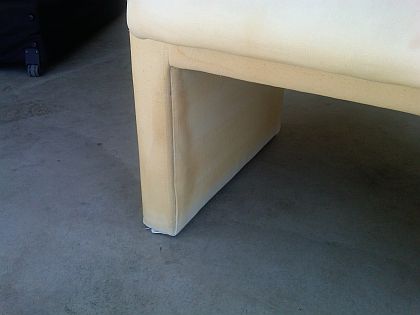
Brown discolorations can happen in a number of fiber types, but for the purpose of this discussion, we will focus on browning on cotton and linen.
Browning occurs when components of cellulose fibers, including lignin, break down in detergent and water and wick to the surface of the fabric during the drying process.
How to Prevent Browning:
- Test and Identify: Not all white fabrics contain cellulose fibers; do a burn test to confirm that you have cotton or linen.
- Qualify: If the customer has allowed a white cellulose fiber fabric to become heavily soiled, the aggressive cleaning techniques needed to restore it will nearly always cause browning unless you are in a very controlled, in plant environment. Advise your customer accordingly. Also PRICE the job accordingly!
- Vacuum Thoroughly: This should always be your first step in cleaning, but it should be especially so with risky natural fiber fabrics, such as cotton and linen.
- Apply Distilled Water: Distilled water prevents (and sometimes removes) water marks and helps prevent browning as well.
- Clean with Very Low Moisture techniques (VLM): Unless overall soil is deeply imbedded, VLM cleaning with a neutral detergent, such as Brite N Soft, is the safest way to clean cellulose, as well as protein and regenerated cellulose fibers. You can use a product specifically formulated for cotton and linen for this step if tannin stains or pre-existing browning is present.
- Use Hot Water Extraction ONLY if Necessary: (In this case, warm water extraction, not hot.) If you need to use HWE, be sure to use an acid rinse, and not to over wet. A mist of a browning or coffee stain treatment left on the areas that were cleaned with HWE is a good step to prevent post cleaning browning. When possible, only use HWE on white cotton or linen when you can clean it in plant.
- Absorbent/Adsorbent Extraction: Use cotton towels (absorbent) or microfiber cloths (adsorbent) by hand or with the use of an orbital buffer to remove excess moisture, wicked soil, or early-stage browning.
- Speed Dry: Use airmovers to speed dry the fabric.
If you follow these 8 steps, you will rarely encounter post cleaning browning. If browning does occur, it will likely be because the material was abusively soiled and that it required restorative cleaning. Address that in your Qualifying step, and get paid for the needed time to correct the problem if it occurs.
Coming Soon . . .
******************************
Jim Pemberton's
Fabric Pro Upholstery Specialist Workshop
"Specialist" Course With Extensive "Hands On" Training
Class size is very limited for personal attention purposes, so register today.
New Date Announced!
August 14 - 15, 2026
Attleboro, MA
New Class Coming to Florida later this year!
How Can You Benefit From This?
Click here for complete class details
******************************
Click Here to Register for a class
Next Available Date?
Click Here for The Learning Center Calendar


