

 Membergate

THE SERVICE CENTER
DESIGNING A TRUCKMOUNT
From Trend Tracks Magazine...
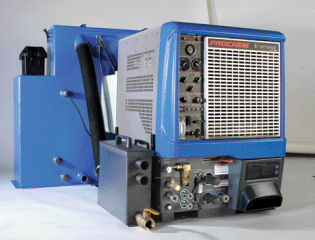
By now many of you have seen ads in the trade magazines about the new Prochem Everest 650 and 408 truckmount. When Prochem builds a new truckmount, I am often asked what the process is to build a new unit and who designs it. The WHO is YOU, the truckmount operator or owner. Bet you never thought of yourself as a truckmount design engineer! Well, you are.
INFORMATION GATHERING
The first step in the design process is to gather information from the field. Marketing, engineering, and research and development (R&D) meet with Prochem dealers for direction. Prochem dealers interact with owners and operators every day and have a pretty good idea what their operators want to see on a new truckmount. Dealers will recommend customers for one-on-one interviews, which is a great way to get the information. The only way you can determine the customers' needs and wants is to ask them. You do this in your business every day.
The Prochem marketing group conducts one-on-one interviews or round table discussion groups. The information is compiled by the Prochem marketing group into meaningful data. Next, the marketing group sets the performance criteria of the unit and translates the information into the wants and needs of the customer. Not only must the truckmount meet the performance expectations of the customer, it must have appeal. When your customers look at your truckmount they need to be impressed with the appearance as well as how well it cleans their carpet. For instance, when the new front was added to the Peak, everyone told us they love the performance but it just didn't have that WOW factor. So we updated the look with a stainless steel grill and added the flow simulator for setting chemical without triggering the wand (Thanks for the suggestion).
RESEARCH AND DEVELOPMENT
Once marketing has gathered all the information it is passed on to the R&D team. This is where the unit will start taking shape. This is what I consider the fun part. With the information at hand the R&D group goes to work on the design of the unit. Once the determination is made as to how the unit will be used it's time to sit down at the drawing board and determine engine, water pump and blower size. If it will be a single-wand unit, such as the Blazer XL, Legend XL, or Peak, it needs to meet the performance requirements of a single operator; however, it still has to meet the standards of the larger dual-wand units. If the unit will be a dual-wand unit such as the Apex or new Everest it has to meet two (2) operator demands with more heat and a larger vacuum system and a larger engine. It may also need the higher pressure option (3000 PSI) for cleaning hard surfaces or walls and ceilings.
The Prochem marketing group conducts one-on-one interviews or round table discussion groups...The marketing group sets the performance criteria of the unit and translates the information into the wants and needs of the customer.
If the truckmount like the Everest 650 will be used primarily for the restoration industry, it will need a larger blower for longer hose runs with more vacuum. It will also need a higher capacity cooling system for the engine. This will allow the engine to run for long periods of time without water.
CONCEPT ARTIST
Once the R & D team has an idea how the unit will be put together it goes to the next step - Concept Artist. During this stage the look of the unit will be developed. The new unit needs to have performance under the hood, but it has to look good as well. Your customers should be encouraged to look at the machine inside your van. Remember, it is the total package. I have to tell you, my hat is off to the folks who are involved in these initial stages. It is a lot of trial and error! The first offerings or plans may not be accepted, then, it's back to the drawing board. Once R&D gets the early unit parameters approved it moves to the next step.
PROJECT TEAM
Once the unit becomes a project or is approved, a project team will be formed to develop and monitor the progress of the project. The project group will include R & D, marketing, engineering, technical support and manufacturing. The project group reviews all systems - the engine, water pump, blower and heat exchange system. The heat exchange system for the new Everest was a complete redesign and had to be developed first.
The heat exchange system is very effective while at the same time remaining simplistic. I like simple. The operator has complete control of the heat being produced. It's nice to have plenty of heat; however, you must be able to control it. A new blower also had to be developed. Since the Everest 650 was being developed primarily for the restoration market it needed a large blower with lots of CFM (cubic feet per minute). In a joint venture between Prochem and Gardner Denver Sutorbilt, the new high capacity 650 Tri Flow (650 CFM) blower was developed. The new larger blower also needs lots of horsepower to spin it; the power plant selected was the Hyundai Alpha 68 hp(1.6liter) engine.
This is another ongoing function of R&D, to test new products such as engines to make sure we have the latest in engine technology for new units. The one thing you learn early in manufacturing is you have to be prepared for change. If a manufacturer elects to stop making a product (such as Nissan decided to get out of the industrial engine market) you have to be ready with a replacement. The Hyundai has plenty of power and all the upgrades needed to meet the current and future EPA standards. The engine is port fuel injected with a 10-blade fan and a large capacity radiator and 80 amp alternator to power 12 volt lights for dark rooms. If you keep tabs on the industrial market you already know why the Hyundai engine fits the bill. Hyundai has a committed industrial division, which is very important for a strong working relationship.
EXTERIOR DESIGN
Once the components are finalized the design team will start working on the exterior of the unit while R & D completes work on the nuts and bolts of the truckmount. This is when I step back and watch. I am always amazed with the new ideas the R & D and design team can come up with. For instance, the new patented heating system on the new Everest 650 was one of the systems I looked at and said "Wow! Now why didn't I think of that?" The work will continue placing each component on the truckmount frame.
PROTOTYPE TESTING
Once the unit is assembled it is now labeled a prototype and will be tested by R & D to make sure all systems are performing to expectations. During the R & D testing each component will be tested and evaluated by the project team. When I say each component, I mean everything! The project team will look at every piece going on the unit and evaluate its performance. If, for some reason, the component does not meet expectations, changes will be made accordingly. Once the project team is satisfied and the unit has met the test criteria, the unit is sent to our manufacturing facility in Englewood, Colorado for more testing in the test booth.
During the test procedures we subject the machine to extreme conditions. In Arizona we subject the machine to summer heat and dry climate; in Colorado the machine must perform in high altitude (5000 ft) and cold weather. After the unit achieves the test hours required, the unit and all the components are disassembled and inspected.
After component testing is complete, a unit is placed into the field to see how it performs. This is the real test. If it passes this test it is ready for the trip down the assembly line. The first few units called pilots may spend some extra time on the line before full production can begin.
FINAL ASSEMBLY
Assembly procedures include which station will install what components. The first station will be the matching of truckmount frame to the engine. The next station may do lower-level work such as heat exchangers or water pump. As the unit moves down the line, engineering and quality control will check procedures and torque specifications settings. As each step is completed a color mark is placed on the hardware used to attach the component. The next time you visit the Prochem dealer in your area look at a new unit. You will see all the nuts and bolts with color marks. This is the mark that the assembler uses after they install a component such as water pump or blower. They also mark the fluid levels after they are filled.
TEST BOOTH
Once the unit has completed the trip down the assembly line it's into the test booth. In the test booth each system is tested for performance. If there should be a problem it is fixed in the booth, or if serous enough, placed in a holding area for quality control. I know after working the line every once in a while, the assemblers do not want a failure in the booth, as that quality control color mark is like a signature. Everyone on the line takes pride in assembling everything correctly. Once the testing in the booth is completed it is sent to the last station for final inspection, clean up and boxing for shipment.
When I look at the crude truckmounts (they did work) of the past I am amazed how far we have come in the industry; however, the fire-breathing dragons (oil fired truckmount) of yesterday no longer meet the needs of today's professional cleaner. For me there is nothing sweeter than to have a customer tell me we have hit the mark and coupled the right truckmount to the operator. To see the new Everest 408 and 650 and the complete line of Prochem truckmounts stop by your local Prochem authorized dealer.


