

 Membergate

The Tool Didn't Ruin it, You Did!
One of the most important, and least discussed, innovations in our industry has been the use of “dry tools” for upholstery cleaning. If the term “dry tool” isn't necessarily clear to you, what it describes are tools that redirect the flow of cleaning solution so that it doesn't penetrate to the back of upholstery fabrics.
These tools aren't technically “dry”, but they do allow for low moisture cleaning of delicate fabrics, with less risk of browning, bleeding, and shrinkage, as well as providing faster drying.
The "Upholstery Pro" - our favorite "Dry Tool"
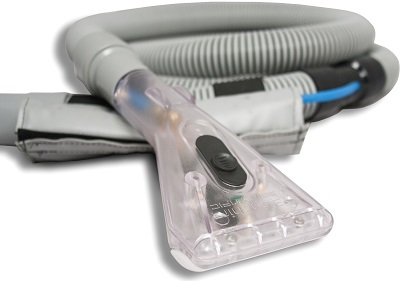
With the advent of these “redirected flow dry tools”, cleaners found themselves able to clean a wider variety of fabrics with less risk, better results, in less time. Another less talked about, but equally important, feature of most of these tools is that they prevent over spray, which lessen the risks of damaging flooring, walls, or other furnishings during the cleaning process.
However, these advantages do NOT eliminate risks in cleaning!
Too many cleaners allow these tool's features to lull them into apathy when it comes to upholstery cleaning products and processes.
Three Problems You Must Avoid:
#1 - Color Bleeding: Over wetting is a common cause of bleeding, but some dyes are sensitive to any moisture, or to specific cleaning products. The fact that a fabric doesn't get as wet doesn't necessarily mean that it won't bleed.
#2 - Cellulose Browning: As with color bleeding, there is less risk of browning when dry tools are used, but if the wrong chemistry is used, or if other factors delay drying, white natural fiber fabrics still may brown.
#3 - Texture Damage: Not all dry tools have vacuum relief valves, and regardless of low moisture, texture damage may occur if the vacuum of the cleaning extractor is too strong for the fabric.
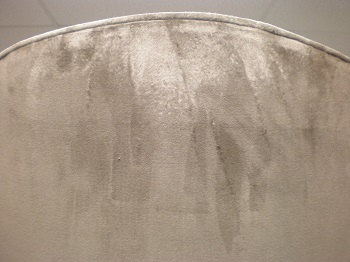
This velvet was distorted by excessive vacuum and improper technique-
Three Problem Solving Steps:
#1 - Pretest: All fabric should be tested for dye fastness and fiber family to determine if color bleeding or texture distortion might occur.
#2 - Choose The Right Products: Always use products formulated for the upholstery you are cleaning. Natural fiber fabrics, regardless of the nature of your cleaning tool, must not be cleaned with highly alkaline carpet cleaning products.
#3 - Watch Out for Distortion: If your dry tool doesn't have a vacuum relief, find another way to adjust the vacuum on your machine before using the tool on a delicate fabric that might become distorted, or tear, as a result.
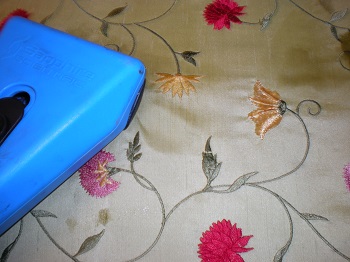
This cleaning tool's vacuum adjustment is adjusted so this delicate fabric doesn't tear-
With the shrinking use of carpet in homes, upholstery cleaning services are more important than ever. Be sure to get a dry tool, if you haven't already, and follow the three steps listed above so that you can clean upholstery safely and profitably for your customers.
If you would like to know more about how you can put tools such as these to use in your cleaning business, join me at our next Fabric Pro "Hands On Upholstery Cleaning Workshop". Details follow:
******************************************
For total access to Pembertons eCleanAdvisor, Join Now for less than $20. per month!
Pembertons eCleanAdvisor is dedicated to sharing knowledge with customers and industry friends -- Join Now! For a membership of less than $20.00 per month, which you may cancel at any time, you get uninterrupted access to our private, member's only, eCleanAdvisor site -
Subscribing now ensures that you'll immediately receive access to valuable information you may need for keeping up-to-date with the professional cleaning industry, no matter where you are.


