

 Membergate

Watch Out for These Four Problems with Rayon/Viscose Fabrics!
If you've ever paid a claim for a piece of upholstery that bled, faded, shrunk, ripped, or had nap distortion that couldn't be repaired, it likely had rayon (or its close "cousin" viscose) fibers in its construction!
The Troubles with Rayon/Viscose:
Following are four (4) issues you must be aware of before cleaning any textile that uses rayon/viscose in its construction!
Color Loss or Bleeding:
Rayon/viscose has the tendency to both fade and bleed. In your inspection step, be sure to remove arm covers, examine the zipper area behind cushions, and other areas that are not exposed to sun, soil, or abrasion. If these unexposed areas are darker, warn your customer that not only will the soiled, exposed areas not return to the original color, but they may actually experience more fading as a result of cleaning.
Spills, especially alcohol, perfume, hair treatments, as well as urine may permanently discolor rayon/viscose fabrics. Perspiration may also cause color damage. Avoid using spotting agents that contain alcohol, mineral acids (such as rust remover), as well as bleaches.
Cellulose Browning:
Rayon/viscose fibers, while man made, contain natural cellulose fibers, and may turn yellow or brown if allowed to stay wet too long after cleaning, or if alkaline cleaning agents are not neutralized and rinsed from the fabric.
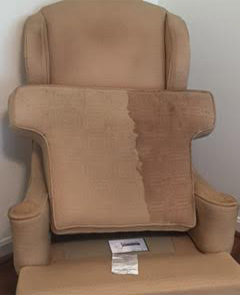
Treatments applied to rayon/viscose and other natural fibers will leave a "ring" or water stain" from spills of any sort, even just clear water. These watermarks from spills may be permanent, and all cleaning must be done by evenly dampening the entire fabric prior to extraction cleaning.
Fabric Weakness:
Rayon/viscose weakens greatly when wet. This issue has deeper implications than you might first assume.
The first concern with fabric weakness is, of course, that the fabric might rip during extraction cleaning, and that possibility does exist. Use only extraction tools that have a built in glide and a perforated vacuum slot, as well as a vacuum release to minimize the risk of tearing. A non metallic screen could also be used as a barrier between the fabric and the tool. These precautions would be of particular concern when cleaning old or sun damaged fabric, as well as heavily soiled fabric that may require more aggressive cleaning.
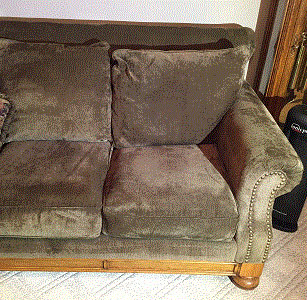
A more common problem is texture distortion. Velvet and chenille fabrics made with rayon/viscose face yarns need careful grooming immediately after cleaning to prevent permanent distortion.
- Dry Clean:
As the majority of the above mentioned problems are caused by cleaning with water based solutions, the simple answer in some cases is to dry clean rayon/viscose fabrics.
If the fabric is lightly soiled, and has no visible spots or stains, dry cleaning might be an acceptable option. Dry cleaning causes almost no texture distortion, and most (though not all) dyes are stable to dry cleaning solvents.
WARNING!
Dry cleaning will not remove water soluble soils, and in addition you must use proper personal protection equipment; advise your customer of the health and fire hazards related to dry cleaning; as well as ventilate the work site if you intend to dry clean fabrics in the home. In today's "chemically conscious society", it is often a better practice to only dry clean upholstery fabrics in plant, not in the home. - Low Moisture Cleaning:
Cleaning with very limited moisture, such as a dry foam, or a fine mist of a neutral pH "encap" detergent (one designed for upholstery, not a crystal forming encap such as is used for carpet) followed by gentle towel extraction will be more effective than dry cleaning. Be certain to test all products used for potential color damage, and groom any pile fabrics, such as velvet or chenille immediately after cleaning. Cleaning detergents with a neutral pH will be safe on most dyes and rarely create color bleeding issues, especially if their application is followed by rapid drying. - Restorative Cleaning:
Some fabrics are simply too heavily soiled to respond to cleaning with either dry cleaning solvents or low moisture cleaning methods. Remember that heavily soiled rayon/viscose is likely to also be stained, and to have pre-existing color damage.
Pro Tip: Rug shampoos that are formulated for viscose rugs work excellently on rayon/viscose upholstery fabrics. If you want to learn more about how use these products on upholstery, be sure to attend a Fabric Pro Workshop where you will learn a great deal about products and processes for cleaning rayon/viscose upholstery fabrics.
Before you attempt to use higher volumes of water, heat, and strong cleaning detergents on rayon/viscose, be certain to obtain a written understanding that clearly states that you cannot be responsible for texture damage, color damage, and shrinkage, as any or all may occur when rayon/viscose fabrics are aggressively cleaned.
Understanding these characteristics gives you yet another reason to encourage your clients to have their furniture cleaned regularly, and for you to stay in close touch with furniture retailers and designers, and to let them know YOU are the best resource for cleaning these fabrics.
*********************************************************************************************************
If you'd like more information on how to:
(#1) properly qualify your work,
(#2) how to AVOID causing the above problems,
(#3) how to correct such problems;
(#4) You must also have the proper written pre-understandings with your customers.
For all the above as well as much, much more, plan to attend one of our upcoming “Fabric Pro Workshops”.
Coming Soon . . .
******************************
Jim Pemberton's
Fabric Pro Upholstery Specialist Workshop
"Specialist" Course With Extensive "Hands On" Training
Class size is very limited for personal attention purposes, so register today.
October 9 - 10, 2026
Gainesville, FL
How Can You Benefit From This?
Click here for complete class details
******************************
Click Here to Register for a class
Next Available Date?
Click Here for The Learning Center Calendar


