

 Membergate

Testing Mistakes That Can Cost You Big!
Colorfastness or Dye Bleeding is a problem rarely encountered by upholstery cleaners today. The advent of "dry tools" for cleaning, and the availability of safe, effective cleaning agents that do not rely on high pH or aggressive solvents have made this issue almost a non-issue.
However, there are still fabrics being manufactured that use dyes that are not colorfast to even the mildest of detergents; that cannot be stabilized by any of the available "dye locks", and in some rare cases are not even stable to dry cleaning solvents.
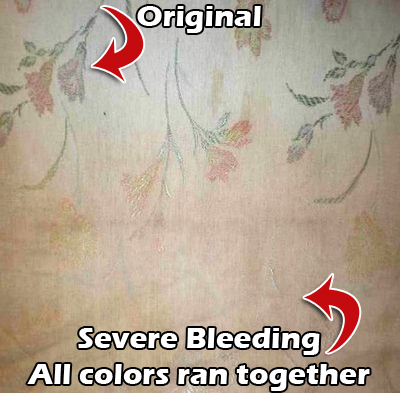
Unfortunately, few cleaners do this test properly, and for that reason some pay costly claims or lose customers and just can't understand why it happened to them.
Here are four of the most common mistakes cleaners make:
1. Inadequate Penetration of Test Material
2. Wrong Product Used
3. Failure to Use Agitation During Testing
4. Insufficient Time Allowed
To avoid these mistakes, its best to understand what you are trying to do when you conduct a colorfastness test.
Simply put:
You are trying to duplicate in a small, inconspicuous area, what will happen on the entire fabric if you clean it. With that understanding, it's important that you test as follows:
1. Test Material Must Penetrate Fabric: Cleaning processes require agitation and sometimes repeated application of detergents and rinsing agents. Your test area should get as wet as the most heavily soiled arm will.
2. Test With What You Will Use: Use the most aggressive product you intend to clean with for the testing. Also remember that many spotting agents and stain removers are more aggressive than standard cleaning detergents.
3. Allow Dyes to Migrate Into an Absorbent Cloth: Using agitation (rubbing with a towel) to test for dye stability is rarely useful. Many dyes "crock" (rub off with abrasion) that do not bleed. Worse yet, many dyes that do bleed DO NOT crock.
4. Allow Test Area to Dry Naturally: When dyes migrate, they wick from the yarns where they belong, into adjacent yarns. By using a white, absorbent cloth, the dyes should instead, migrate into the cloth.
You can also observe the test area to see if the dyes are migrating as you test; you will see a dark stain or "water mark". NEVER speed dry the test area with a hair dryer. You may create a condition you cannot duplicate when you clean.
The reason most cleaners get away with bad testing (or worse yet, not testing) is the rarity of fabrics with unstable dyes, and the improved tools and products that we use. Do not let that lull you into being complacent: When fabrics bleed, they are almost never correctable, and replacement costs can be in the thousands of dollars.
*************************************************************************************************
You have the responsibility to protect your business from needless claims and to only do work that is profitable and builds your business.
If you'd like to learn how to clean upholstery from the beginning of the job to the final touches, and how to treat and remove nearly every type of soil level and stain from the most challenging of fabrics, join me at our all new Fabric Pro workshop.
Coming Soon . . .
******************************
Jim Pemberton's
Fabric Pro Upholstery Specialist Workshop
"Specialist" Course With Extensive "Hands On" Training
Class size is very limited for personal attention purposes, so register today.
Please Join Us Here - December 4 - 5, 2025 in McKeesport, PA
OR January 9 - 10, 2026 in Farmingdale, NY
How Can You Benefit From This?
Click here for complete class details
******************************
Click Here to Register for a class
Next Available Date?
Click Here for The Learning Center Calendar


