

 Membergate

Residues: The Enemy of Protector Performance!
When you have seen upholstery protector
demonstrated at a class or trade show,
did you notice that it always seems to
be applied to new fabric, or tissue?
There isn't anything wrong with that, but bear in mind that you are most often applying protector to fabric you just cleaned, not something new and never used, and never cleaned.
What's The Difference?
When you clean upholstery, you are attempting to remove foreign matter from the fabric, and in your effort to do so, you apply cleaning agents to loosen body oils, spills, and general soiling that are designed to dissolve, emulsify, and/or suspend soils so that you can rinse them away.
What isn't so obvious is that if you apply more preconditioner than you can rinse from the fabric, your protector may not bond properly! A fabric left with residual cleaning agents has a barrier that protector cannot penetrate, and thus your protector will be ineffective, or at least not as effective as the demonstration you may have given your customer might imply.
One of the most important things you could do for yourself, and ultimately your customer, is as follows:
#1. Pick up some soiled cushions from an upholsterer's dumpster or a thrift store.
#2. Clean them using the prespray, boosters, etc needed to restore heavily soiled upholstery.
#3. Rinse as thoroughly as you feel necessary to remove the suspended soil and detergent residues.
#4. Apply your protector.
#5. Test with water and cooking oil after complete drying.
You'll find that if you “over preconditioned and under rinsed”, your protector might not work!
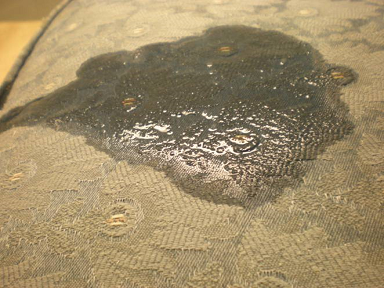
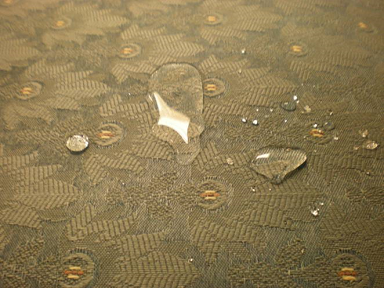
The Difference, As You Can See, Is Significant.
What should you do?
In many cases, cleaners apply far more pre-conditioner than is necessary because they are used to pre-spraying carpet. Take a trigger sprayer of water, and spray your pant leg or shirt sleeve. How much does it take to wet through until you feel it against your skin? That is already more product than you would need to apply to loosen soil.
Lately there have been clear upholstery cleaning tools made available to the marketplace, such as the newest version of the Sapphire Scientific Upholstery Pro. If you use such a tool, you'll be able to observe if detergent residues remain in a fabric you are cleaning as you rinse the fabric.
Practice these suggestions, and build the confidence that you are cleaning fabrics, not just to improve their appearance, but to prepare them to properly accept protector so that the customer can receive the value that they expect.
If you'd like to know more about how to apply protector so that it really works, sign up for our next Fabric Pro Workshop.
Coming Soon . . .
******************************
Jim Pemberton's
Fabric Pro Upholstery Specialist Workshop
"Specialist" Course With Extensive "Hands On" Training
Class size is very limited for personal attention purposes, so register today.
Please Join Us Here - December 4 - 5, 2025 in McKeesport, PA
How Can You Benefit From This?
Click here for complete class details
******************************
Click Here to Register for a class
Next Available Date?
Click Here for The Learning Center Calendar


