

 Membergate

Four Steps to Remove Browning Without Bleaching!
What would you do if your customer texted you a picture of this problem? Turn it down? Attack it with bleach?
Most correction attempts ruin fabrics such as this 'browned cotton'!
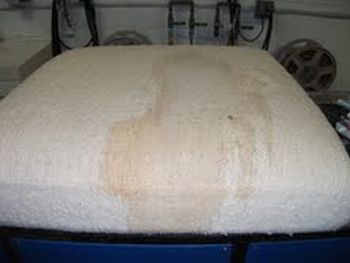
The following is a case study of how a cleaner restored this water damaged fabric without damaging bleaches:
A cleaner was asked if he could save a cushion that had been water damaged from a fresh water spill. This cleaner had tried to remove the browning by using a product designed for cleaning raw cotton. Such products contain reducing agents, which not only prevent browning, but in many cases can remove light browning as well.
However, the browning was still present after one attempt at correction, so he wisely decided to call regarding the situation and we discussed the following issues:
#1. - The cotton yarns used in this fabric were extremely sensitive. When water alone causes browning, and it isn't easily removed by cleaning with a product containing a reducing agent, the problem should be considered to be severe.
#2. - The fact that one attempt made little difference meant that repeated attempts would likely not show improvement.
#3. - The fabric's weave was delicate, and repeated applications of a detergent and reducing agent would very likely cause texture distortion, or at least leave the fabric feeling stiff.
#4. - There was no alkaline detergent residue, since the problem was not caused by improper cleaning, nor any contaminants in the spill, such as sugar, dye, or food products; determination was that the browning was caused by tap water alone.
Based On The Preceding Information,
The following procedure was recommended:
Step 1. Wet the affected area with distilled water.
Since it was known that the fibers will release the browning staining material to water alone, water is all that is needed to cause it to release (and therefore move) again. Distilled water was chosen because it has few impurities and it acts as a superior solvent in comparison to tap water.
Step 2. Apply an absorbent powder to the wet area.
Absorbent powder spotters act like thousands of sponges and absorb water from a treated area rapidly.
Step 3. Allow to dry completely.
(Overnight recommended)
Step 4. Brush & vacuum powder off of fabric.
The result? Note Below that the browning has been completely removed!
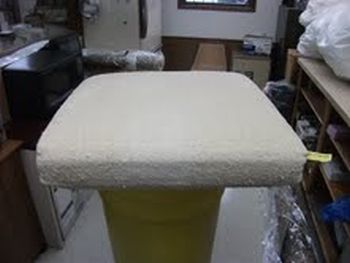
Always remember that any time bleach is used to create a color change, there is a measure of fiber destruction that occurs, even when using far less aggressive reducing agents. If you can remove browning without using such products, the fabric will be more likely to retain its original appearance and texture; plus your customer will be far happier with the result.
The key is to remember from the start that browning (unless you caused it) is a serious problem that the customer has to “own”. The process of browning itself weakens the fabric, and if reducing agents or bleaches are the only alternative, the chemical reactions that these agents use to decolorize the stain are even more destructive.
*****************************
Coming Soon . . .
******************************
Jim Pemberton's
Fabric Pro Upholstery Specialist Workshop
"Specialist" Course With Extensive "Hands On" Training
Class size is very limited for personal attention purposes, so register today.
Please Join Us Here - July 18 - 19, 2025 in Rochester, NY
How Can You Benefit From This?
Click here for complete class details
******************************
Click Here to Register for a class
Next Available Date?
Click Here for The Learning Center Calendar


