

 Membergate

5 Ways To Stay Out Of Trouble When Cleaning Heavily Soiled Cotton Fabrics!
A cleaner recently contacted me regarding a cotton fabric that had browned. While his primary inquiry was about a cure, I wanted to talk to him about how the problem occurred in the first place.
This Is What Happened:
This cleaner has both the training, products, and equipment to clean the fabric and not cause browning. However, in a few cases, this one most recently, he became frustrated at the poor soil release involved when using acidic cleaners designed for cotton, and instead used an alkaline preconditioning agent.
The product worked, but browning occurred, as you can see in the picture below.
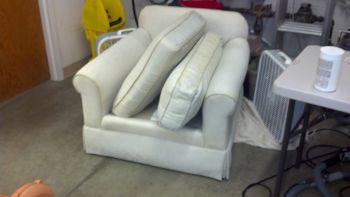
The cleaner had this piece in plant, which fortunately allowed him to then correct the problem by the application of a reducing agent. This is what the fabric looked like after the treatment.
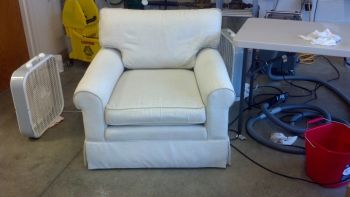
While this might be seen as a success story, the issue remains that it's better to prevent a problem than to cure it.
What could have been done to prevent this problem?
#1. - Clean it Sooner:
If a customer has furniture made from white natural fibers, you should recommend that they have it cleaned before it becomes heavily soiled.
Any time you are in your customers' homes and notice that they have white, natural fiber fabrics (or any delicate fine fabric) you owe to yourself and your customer to inform them of the need to have the furniture cleaned before it becomes stained or heavily soiled.
#2. - Qualify More Thoroughly:
Customers who expect you to clean heavily soiled natural fiber fabrics, especially white fabrics, are being unfair to you, whether or not they know it. What usually can safely clean such fabrics might be ineffective, and strong cleaners very likely will brown the fabric.
While the choice should not be worded as "Would you rather me clean it safely and leave it dirty, or clean it good and brown it?", you should let them know that complete restoration may require in plant cleaning, or two visits at an appropriately higher charge.
3. Clean "Off Site":
Its difficult to remove furniture and transport it to your facility, but it does allow you to better control the drying process, and to touch up remaining soil or browning if it occurs without a second visit to the home.
4. Know Your Cleaning Products and Their Limitations & Risks
If you choose to use products that are very mild and safe for fine fabrics, know their limitations. If you need to use something stronger, use neutralizing agents, speed drying techniques, absorbent powders, and/or anything else needed to eliminate the dangers created by an aggressive cleaning agent.
Also be sure that if the use of such a product creates risks, be sure that those risks are your customer's risk, not yours!
5. Make Business, not Emotional, Decisions:
The issue of how to clean something, and what risks you will assume, needs to be made as a business, not an emotional decision.
If you know what it takes to get something clean, and what risks are involved at each level, then its an issue of whether or not the attempt to do so is worth the financial rewards of cleaning that one article of furniture. Pride or a feeling of emotional commitment to your customer, should never enter into the picture.
Put more simply: Clean furniture the right way, and at the price needed to get it as clean as the customer desires, or don't do it at all.
Coming Soon . . .
******************************
Jim Pemberton's
Fabric Pro Upholstery Specialist Workshop
"Specialist" Course With Extensive "Hands On" Training
Class size is very limited for personal attention purposes, so register today.
October 9 - 10, 2026
Gainesville, FL
How Can You Benefit From This?
Click here for complete class details
******************************
Click Here to Register for a class
Next Available Date?
Click Here for The Learning Center Calendar


